Automated Lead Scoring: How to Separate Hot Leads From Cold Ones Before Sales Wastes a Single Call
Automation
Your sales team receives 200 leads this month. But those 200 leads are not worth the same – some are seriously evaluating and ready to close within the week, others just clicked an ad out of curiosity and bounced immediately. The problem is that without a way to tell them apart, sales ends up calling in whatever order leads arrive – spending equal time on someone about to sign a contract and someone who clicked the wrong ad by accident.
That’s what lead scoring solves: assigning a number that reflects how “ready to buy” a lead actually is, based on real behavior rather than the gut feeling of whoever happens to pick up that lead first.
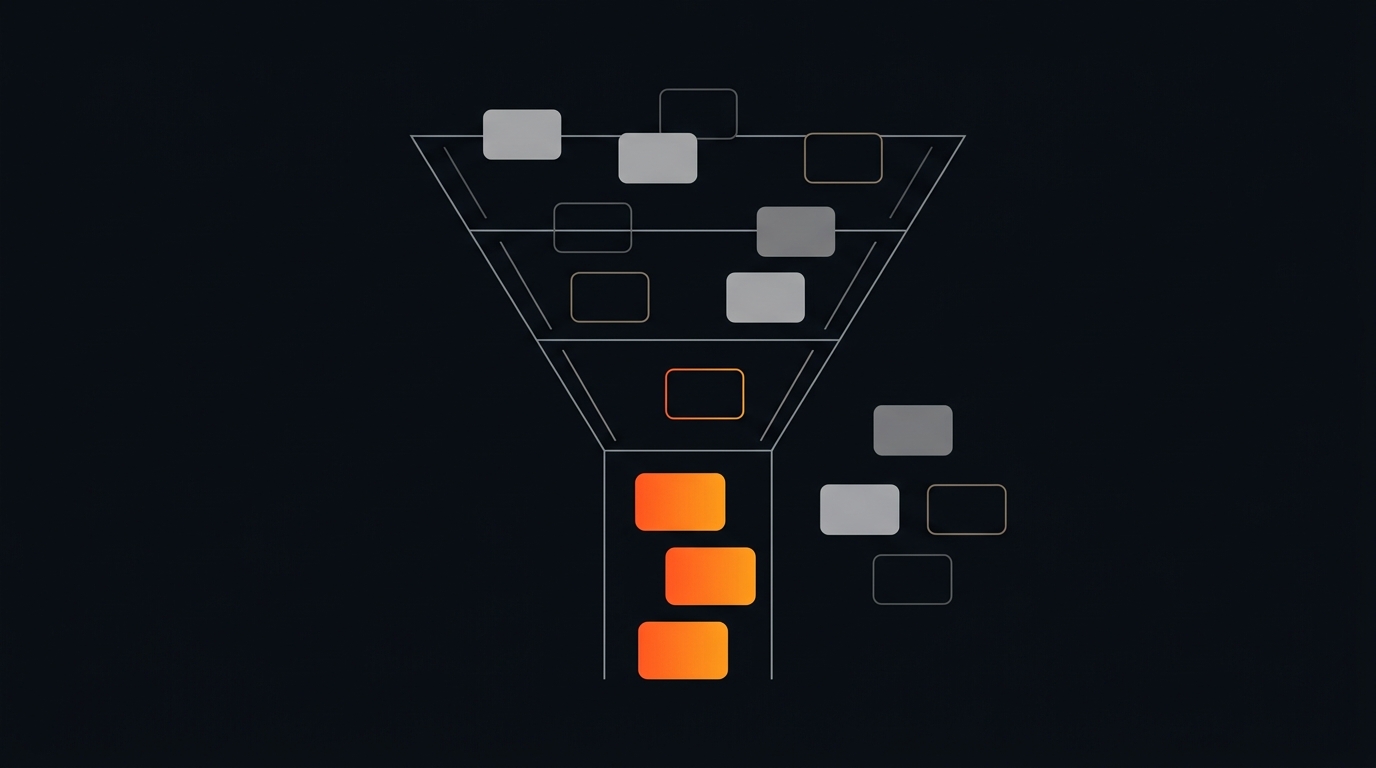
Why manual triage stops scaling
With a few dozen leads a month, an experienced sales rep can usually sense which ones are promising after just a couple of questions. But once volume grows into the hundreds or thousands per month, arriving from multiple channels at once, this approach breaks down in three places.
The first is speed. A hot lead needs to be called within the first few minutes, but if it has to wait its turn in a manual queue, it may have already cooled off or contacted a competitor. The second is consistency. Every rep has a different bar for what counts as “promising,” so a genuinely strong lead gets skipped just because it landed with a less experienced rep, while a weak one gets prioritized because it “sounded enthusiastic” on the phone. The third is traceability. Without an actual score, nobody can explain why one lead was called before another – and the data needed to optimize future ad spend quietly disappears along with it.
Our earlier post on why real estate ad leads disappear before sales calls back covered what happens when lead data is scattered and manual processing is too slow. Lead scoring is the next step – and it only works once that data has already been pulled into a single source.
What signals actually feed the score
A lead score isn’t a guess – it’s calculated from behavioral and declared signals collected across the lead’s entire journey.
Behavioral signals usually carry the most weight because they reflect real intent: how many times someone returned to view a product or pricing page, whether they filled out a detailed consultation request instead of just leaving a phone number, how quickly they responded when first contacted, or how much they engaged with bottom-of-funnel content – like a payment schedule or project brochure – versus top-of-funnel content like a general introductory blog post.
Source signals matter just as much: which channel the lead came from, since some channels have historically converted far better than others. This only becomes visible once a business has multi-touch attribution in place to identify which channel actually contributed to the decision, rather than only crediting the last touchpoint.
Finally, there are declared signals – budget, location, expected purchase timeline. For industries with long sales cycles like real estate, this is what separates someone “just browsing” from someone “ready to buy this quarter.”
There’s no universal scoring formula that works for every business. The weight of each signal has to be calibrated against that specific business’s actual conversion data, not copied from a generic template.

From score to action: don’t stop at “knowing”
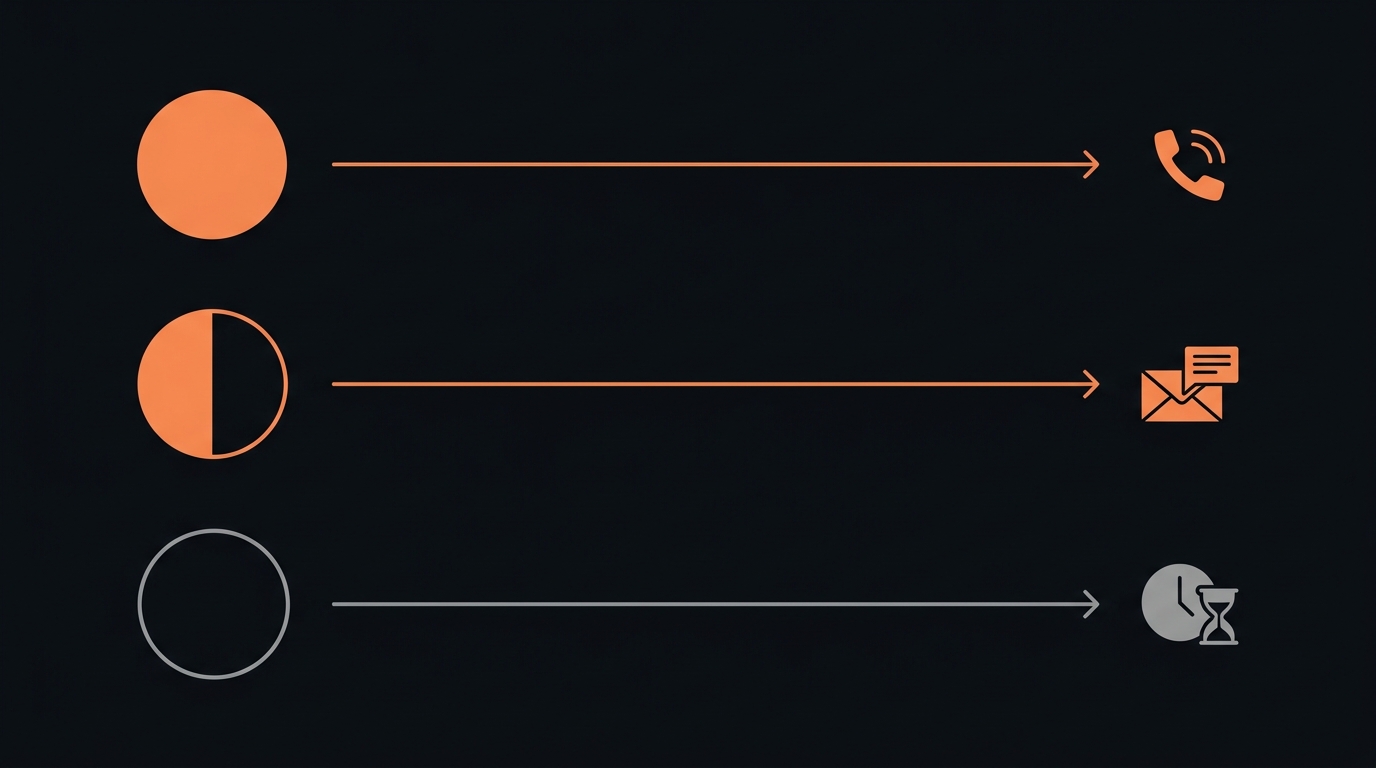
A score that isn’t tied to a concrete action is just a number sitting quietly in the CRM – it doesn’t change anything for the sales team. In practice, scores are usually mapped to three tiers.
Hot leads – high scores – should be automatically assigned to an available rep, with a priority alert to call within the golden window, usually a few minutes after the lead comes in. Warm leads – mid-range scores – should enter an automated nurture sequence via email or a messaging channel, combined with remarketing, until the score climbs into hot territory. Cold leads – low scores – shouldn’t be discarded entirely, but they also shouldn’t eat into a rep’s direct calling time; a long-term follow-up track makes more sense for this group.
This is exactly where lead scoring overlaps with sales process automation: a lead score only becomes valuable once it triggers a corresponding automated action, instead of just sitting on a dashboard waiting for someone to notice it.
Why this requires a unified data source
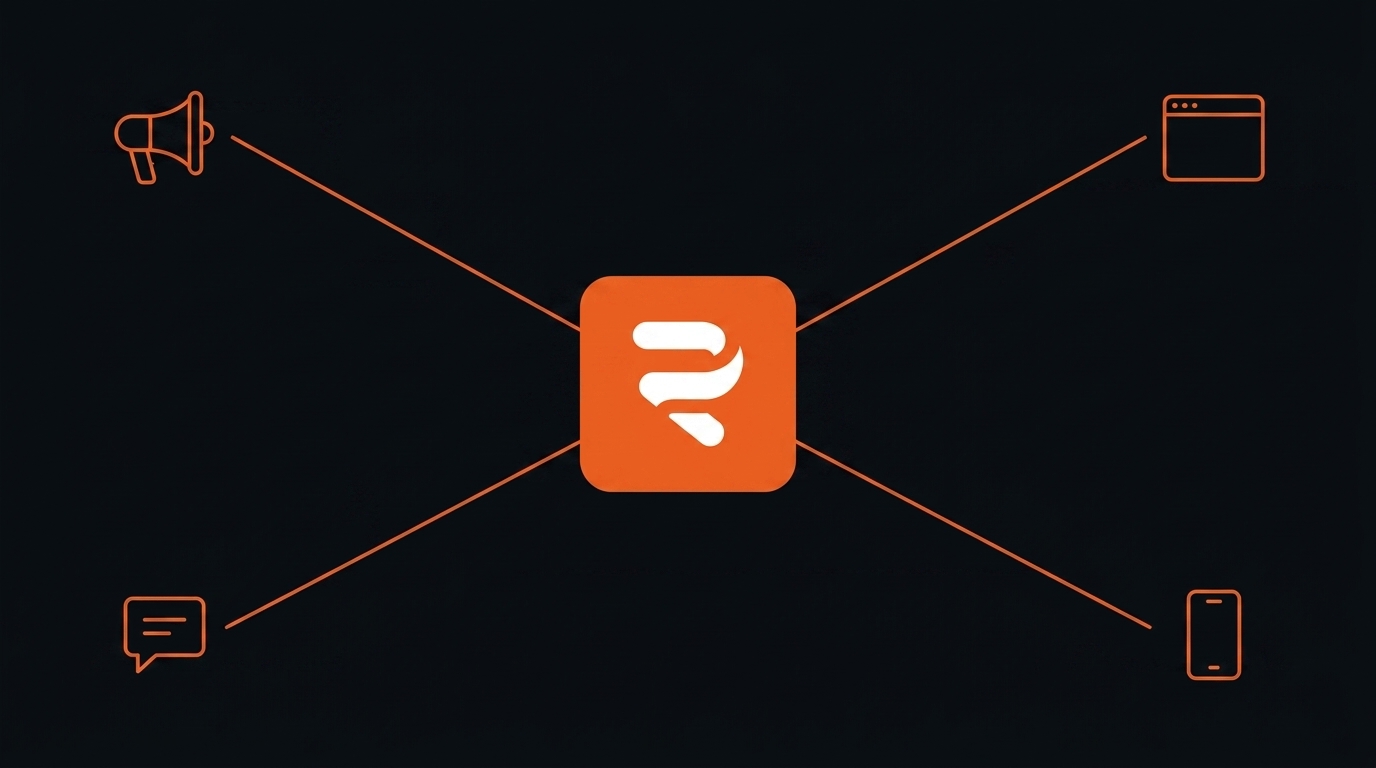
How accurate a lead score is depends directly on how many signals feed into it. If behavioral data lives in one website analytics tool, form data lives in a separate plugin, chat engagement lives in yet another system, and call data only exists in individual reps’ notebooks – there’s no way to score accurately, because the scoring system only ever sees a small slice of the picture.
That’s why R HUB built the Lead Data Platform to pull every signal – from ads, website, social media, and engagement across the entire customer lifecycle – into a single source, then sync it with CRM so scores update in real time and trigger automated action the moment a lead crosses a threshold.
Three common mistakes when getting started
The first mistake is trying to build an overly complex scoring model on day one, with dozens of signals and intricate formulas, before there’s enough real conversion data to even verify whether that formula is correct. The second is setting weights once and never revisiting them, even as the market, customer behavior, and channel performance keep shifting over time. The third is scoring leads without connecting the score to any concrete process – the number sits quietly in a report while sales keeps calling leads out of old habit.
Where to start if you don’t have a scoring system yet
You don’t need to build a sophisticated model from day one. A more practical approach follows four steps.
Start by listing five to seven behaviors or signals your sales team already believes matter most, based on current selling experience. Assign initial weights – they can be subjective at first – then track the actual conversion rate of each score band over four to eight weeks. Next, adjust the weights based on that real data: increase the weight of signals that correlate strongly with closed deals, and drop the ones that don’t. Finally, tie each score threshold to a specific automated action – assigning a rep, triggering a nurture sequence, or firing a priority alert – so the score actually does something instead of just sitting in a report.
Lead scoring isn’t a destination, it’s a continuous feedback loop. The more real conversion data you collect, the more accurately the score reflects genuine buying intent – and the more your sales team spends its time on the right customers, instead of calling everyone equally.
If your business is still triaging leads manually and you want to know whether automated scoring makes sense at your current scale, book a 30-minute conversation with R HUB and we’ll look at your actual lead data together.
Related articles

Lead Response Speed: Why the First 5 Minutes Decide Your Conversion Rate
The odds of connecting with a lead drop sharply after the first five minutes. See why response speed affects conversion…
Read more
The Form Submits Fine, the Lead Just Waits in an Inbox: Why Website Forms Need to Connect Directly to Your CRM
The form submits fine but the lead just waits in an inbox for someone to check - twelve hours pass…
Read more
Duplicate Customer Records: Why the Same Person Ends Up With Three Different Profiles in Your CRM
A customer can accidentally end up with three different CRM records just by touching three different channels. See how duplicate…
Read moreStart with a conversation.
Tell us the real problem you're facing. In 30 minutes, you'll know your next move - even if that move isn't us.
Book a free consultation