- 1. The core problem: ads are optimizing on the wrong signal
- 2. What Facebook CAPI is, and how it differs from pixel
- 3. Event match quality and deduplication – the details that actually matter
- 4. Why CAPI alone still isn’t enough
- 5. Google Offline Conversion Import works on the same principle
- 6. A closed loop: from CRM back to the ad platform
- 7. What changes when the algorithm learns from the right signal
Plenty of marketing teams run ads with full reporting: clicks, leads, CPL by campaign – but when leadership asks “how many real orders actually came from ads this month,” the answer is often a pause. Not because nobody’s tracking anything, but because the ad platform and the sales system are speaking two different data languages. This is exactly the gap Facebook’s Conversions API (CAPI) was built to close – though CAPI alone doesn’t solve the whole problem.
The core problem: ads are optimizing on the wrong signal
Facebook’s or Google’s ad algorithm doesn’t “know” who actually bought something. It only knows what the browser pixel reports: who clicked, who viewed a page, who filled out a form. The algorithm then automatically looks for more people who resemble that click-or-form-fill group – not the group that actually became customers. When the input signal stops at “interested,” the longer an ad runs, the more precisely it optimizes in the wrong direction: bringing in more people who like clicking, not more people ready to buy.
This has gotten worse since Apple rolled out App Tracking Transparency (ATT) and browsers increasingly block third-party cookies. Pixel tracking – which runs through the browser – started losing a meaningful share of conversion events before they ever reached Facebook. Ad data has become progressively less accurate, not because marketing teams are doing anything wrong, but because browser-based data collection itself is increasingly constrained.
What Facebook CAPI is, and how it differs from pixel
The Conversions API (CAPI) sends conversion events directly from a business’s own server straight to Facebook’s server – bypassing the browser entirely, independent of pixel, unaffected by browser blocking or ad blockers. In essence, it’s a parallel data pipeline alongside pixel: pixel keeps working client-side as before, while CAPI adds a more reliable confirmation source straight from the business’s own internal systems.
When a customer takes a meaningful action – filling out a form, placing a deposit, signing a contract – the backend system sends that event straight to Facebook along with (hashed) customer identifiers, matching it back to the original ad click. Facebook receives this signal almost instantly, regardless of whether the customer has cookies disabled, is browsing privately, or has tracking blocked on an iPhone.
Event match quality and deduplication – the details that actually matter
Running pixel and CAPI side by side raises a practical question: if both send an event for the same action, does Facebook count it twice? It shouldn’t, if set up correctly. Facebook matches pixel and CAPI events using a shared event_id sent by both – when the two arrive with the same ID, Facebook treats them as one event and deduplicates automatically. Skip this step and reporting becomes inflated, showing more conversions than actually happened, which quietly undermines the very accuracy CAPI was meant to improve.
The second detail is match quality – how confidently Facebook can tie a server-side event back to a specific ad click. This depends on how many hashed identifiers are sent with each event: email, phone number, external ID, browser and device parameters. Sending only one weak identifier produces a low match score and much of CAPI’s advantage disappears, since Facebook can’t confidently attribute the event to a specific campaign. Getting this right isn’t a one-time integration task – it needs monitoring in Events Manager on an ongoing basis, checking match quality and deduplication rate rather than assuming a single setup will keep working correctly forever.

Why CAPI alone still isn’t enough
This is where many businesses get it wrong: CAPI is just a data pipe – it doesn’t create better data on its own. If the event sent through CAPI is still just “filled out a form” or “clicked to call,” the signal quality is no different from pixel – it’s just traveling through a more stable channel. CAPI earns its value when the event it sends is a meaningful business milestone: a confirmed deposit, a signed contract, a paid order.
But those milestones don’t live inside the ad system – they live in the CRM, in the transaction management system, in the sales ledger. For CAPI to send a genuine “real order” signal, a business needs a system connecting where sales data actually originates to where that signal needs to go – something a plain ad account can’t do on its own.
Google Offline Conversion Import works on the same principle
Google Ads has a parallel mechanism called Offline Conversion Import (OCI). Instead of only measuring events that happen right on the website (form fills, calls through a dynamic tracking number), OCI lets a business import results that happen offline or days later – a lead that called last week and signed a contract this week, for instance. The business sends this back with the GCLID (click identifier) so Google Ads knows exactly which campaign, keyword, and ad actually produced a real order – not just a call or a form fill.
Like CAPI, OCI is only as useful as the “real order” data fed into it – and that data has to be tracked all the way from the moment a customer clicks an ad to the moment a contract is signed, a journey that can span days or weeks in real estate, education, or B2B.
A closed loop: from CRM back to the ad platform
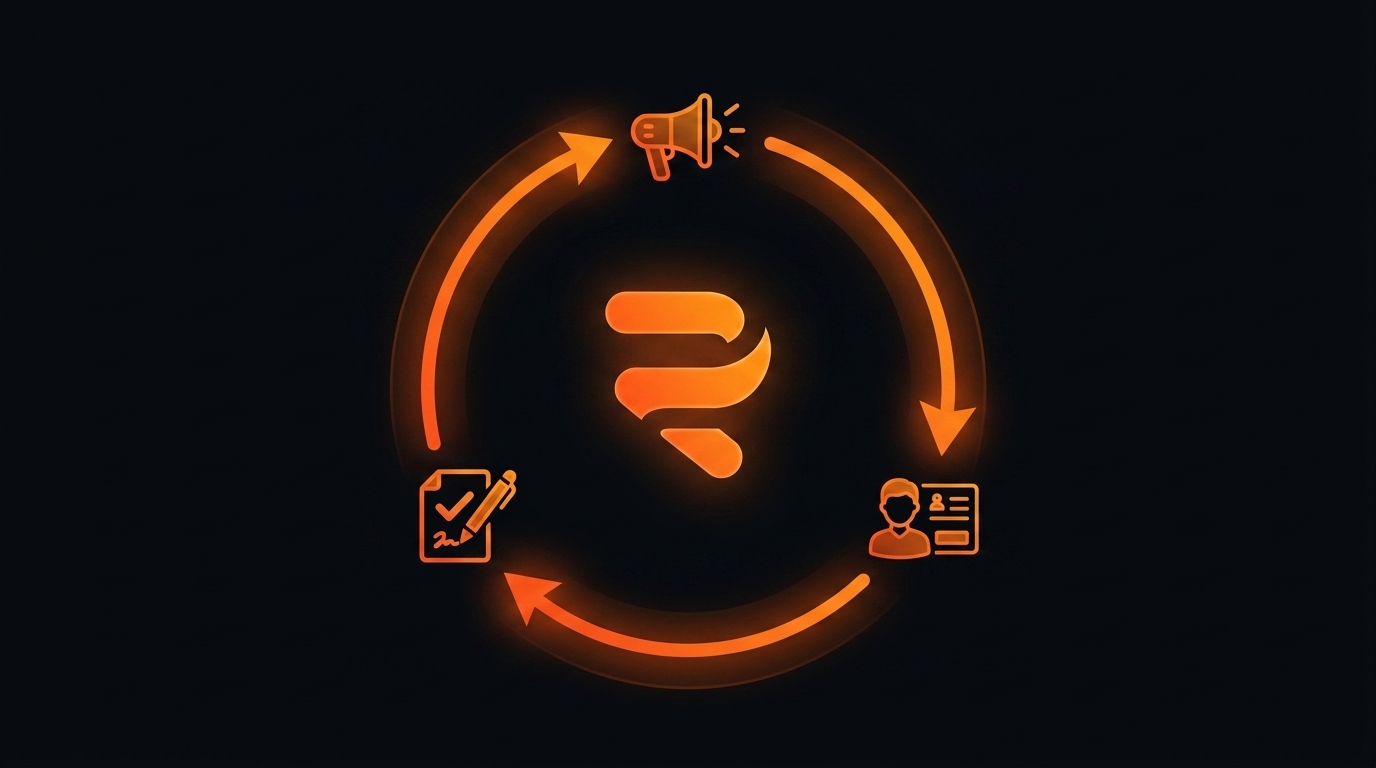
This is exactly why R HUB doesn’t build CAPI as a standalone feature – it sits inside an ecosystem that already includes the Lead Data Platform and CRM. When a lead enters the system, gets nurtured, and eventually becomes an order or a signed contract in the CRM, that “real order” event is automatically sent back to Facebook via CAPI and to Google via OCI – no marketing team manually compiling a spreadsheet and uploading it to each platform every week.
For real estate businesses using R HUB’s Real Estate CRM, this loop is even clearer: a lead from a Facebook ad has its source recorded from the start, moves through the entire deposit – unit locking – contract signing process inside the CRM, and the moment the contract is confirmed, a “purchased” signal is sent automatically back to the exact ad campaign that originated it. This entire process is described in more detail under R HUB’s Digital Marketing Agency product, where the CAPI and OCI loop runs alongside daily budget management and campaign optimization.
What changes when the algorithm learns from the right signal
When the ad algorithm is fed “real order” signals instead of just “click” signals, it starts searching for more people who share traits with customers who actually bought – not people who were merely curious enough to click. Logically, this leads to three observable changes over time: cost per quality lead tends to trend down, since the algorithm stops wasting budget on people unlikely to buy; the rate of leads turning into real customers rises, because the targeted audience is more precisely tuned; and most importantly, the marketing team gets one reliable number to report – cost per order, not just cost per click or cost per lead.
This isn’t magic unique to CAPI or OCI – it’s the natural result of the sales system and the ad system finally speaking the same language: data about what actually happened, not what appeared to happen. And that only holds true for as long as the pipeline feeding both platforms stays accurate – which is precisely why this needs to be built as an ongoing connection between CRM and ad accounts, not a one-off export someone remembers to run at the end of the month.
Is your marketing team optimizing ads on clicks, or on real orders? Book a free 30-minute consultation with R HUB to see how a CAPI loop connected directly to your CRM can change how you measure ad performance.
Start with a conversation.
Tell us the real problem you're facing. In 30 minutes, you'll know your next move - even if that move isn't us.
Book a free consultation